
ISO 9001 vs 14001 vs 45001: Why Integration Is More Than Box-Ticking

ISO certification can look like three separate projects from the outside. One for quality. One for environmental management. One for occupational health and safety. Three standards, three sets of documents, three audit programs and three more layers of administration for people who already have work to do.
That is not how the standards are designed to work.
The ISO 9001 vs 14001 vs 45001 decision is not about choosing between three unrelated rulebooks. Each standard has a different focus, but all three use a compatible management system structure. That means a business can address Quality, Health, Safety and Environment (QHSE) requirements through one coordinated framework rather than building three systems that compete for time and attention.
Understanding that shared structure is the key to deciding whether an integrated management system is practical for your organisation.
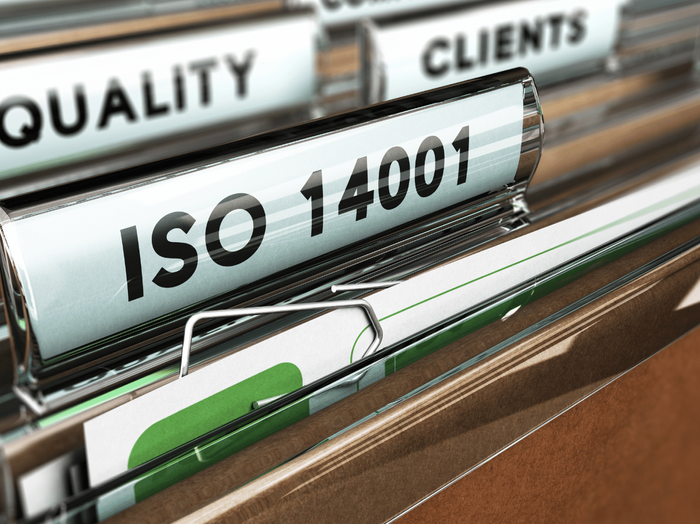
What does each ISO standard cover?
The three standards manage different areas of organisational performance.
ISO 9001: quality management
ISO 9001 provides a framework for delivering consistent products or services, meeting customer and regulatory requirements, monitoring performance and continually improving the processes that affect quality.
ISO 14001: environmental management
ISO 14001 provides a framework for identifying and managing environmental impacts, meeting applicable compliance obligations, preventing pollution and improving environmental performance over time.
ISO 45001: occupational health and safety
ISO 45001 provides a framework for managing health and safety risks, preventing work-related injury and ill health, involving workers and continually improving occupational health and safety performance.
Those scopes are distinct, and the controls needed to manage them will not always be the same. A process for identifying environmental aspects is not interchangeable with a safety risk assessment or a quality inspection. Integration does not mean flattening those differences.
It means managing the common parts once.
Why the standards fit together
Modern ISO management system standards use a common Harmonized Structure, historically associated with Annex SL. This gives them the same core framework, shared terminology and a consistent sequence of requirements.
Across ISO 9001, ISO 14001 and ISO 45001, organisations are asked to address areas such as:
the context of the organisation
leadership and accountability
risks and opportunities
objectives and planning
resources, competence and communication
operational controls
performance monitoring
internal audit and management review
corrective action and continual improvement
The subject matter changes, but the management logic remains familiar. Each standard uses the Plan-Do-Check-Act cycle to turn commitments into controlled processes, measure whether those processes work, and improve them over time.
That compatibility is deliberate. It allows an organisation to build one management framework with quality, health, safety and environmental requirements integrated into the relevant processes.
For example, contractor onboarding may need to address service quality, environmental obligations and site safety. A single onboarding process can cover all three. The business does not need three separate procedures simply because the requirements come from three standards.
Why integrate ISO standards?
The strongest case for integration is not that it produces a neater manual. It is that it reduces friction in the way the business manages risk, responsibilities and performance.
One set of shared processes
Many management system activities are common across all three standards. Document control, training and competence, internal audits, management review, corrective actions and improvement processes can usually be managed through one coordinated approach.
An integrated management system for ISO standards gives teams one place to find the current process, one method for reporting an issue and one clear chain of responsibility. Topic-specific controls still exist where they are needed, but the administrative backbone is shared.
Less duplicated documentation
Separate systems often produce separate policies, registers, audit schedules, forms and review meetings. Over time, those documents can contradict one another or fall out of date at different speeds.
Integration creates an opportunity to consolidate what is genuinely common. Instead of recording the same organisational context or document-control process three times, the business can maintain it once and connect the relevant quality, health, safety and environmental requirements to it.
This does not mean forcing everything into one enormous procedure. Good integration removes duplication without making information harder to use.
A coordinated audit and review cycle
An integrated system can support one coordinated internal audit program and management review cycle. Rather than asking leaders to attend three separate reviews covering overlapping issues, the organisation can examine performance across quality, environmental management and safety together.
External certification audits may also be coordinated as integrated audits, depending on the certification arrangement and scope. This can reduce repeated interviews, evidence requests and disruption across the business.
Better operational decisions
Quality, health, safety and environmental risks rarely stay in separate lanes during real work.
A rushed procurement decision might affect product quality, create waste and introduce a new safety hazard. A process change intended to improve efficiency might reduce defects while increasing worker exposure or environmental impact.
An integrated system makes those connections visible. It encourages decision-makers to consider the whole operational picture instead of solving one problem while creating another.
Do you need ISO 9001, 14001 and 45001?
Not every business needs certification to all three standards. The right scope depends on what the organisation does, the risks it manages and what customers, regulators, tenders or supply chains expect.
A business might reasonably start with only one standard when:
quality consistency and customer requirements are the main commercial drivers
environmental impacts are limited or already managed through a proportionate framework
occupational health and safety risks do not justify third-party certification
a customer or tender requires certification to one specific standard
the organisation needs to strengthen one management area before expanding the system
Two standards may be the practical choice when the risks overlap more clearly. A construction contractor might prioritise ISO 9001 and ISO 45001 because quality, health and safety performance are central to delivery. A logistics, manufacturing or infrastructure organisation may have strong reasons to combine ISO 14001 and ISO 45001 because environmental impacts and safety risks are both operationally significant.
Certification is also different from implementation. An organisation can use the principles and structure of a standard without immediately seeking third-party certification. Certification may become valuable when independent assurance is required, when tenders demand it or when the business wants to demonstrate capability to customers and other stakeholders.
The important point is to choose scope deliberately. Collecting certificates for areas that are not material to the business creates cost without necessarily improving performance.
Build one system around how the business works
The question is not simply whether to choose ISO 9001 vs 14001 vs 45001. It is how to create a management system that reflects your operational risks, obligations and priorities without burying people in duplicated processes.
BridgeRoads Solutions develops practical QHSE management systems aligned with ISO standards and built around the way organisations actually operate. Whether you need one standard, a staged pathway or a fully integrated framework, the goal is the same: a system people can use, maintain and improve.
Recent Posts
See All Why Psychosocial Hazards Are Now a Documented WHS Duty
 Why a Single Source of Truth Matters in Business Systems
 Everything You Need to Know About ISO 14001:2026
Privacy Policy
© 2026 BridgeRoads Solutions. All rights reserved.
GET IN TOUCH


1300 005 277
OUR SERVICES
QUICK LINKS


